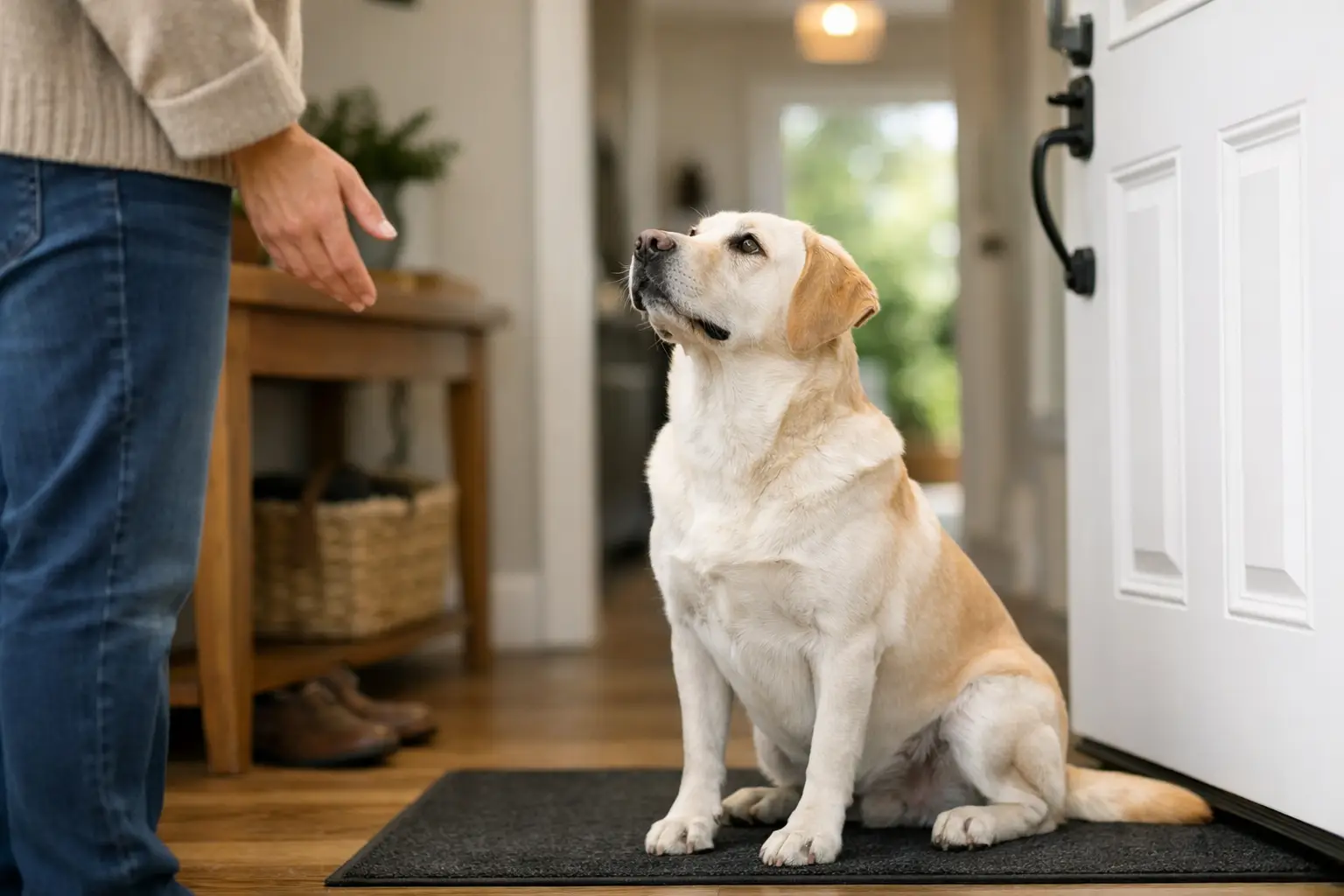
The front door can turn an otherwise manageable day into a burst of barking, jumping, spinning, and shouting. If you want to teach dog calm entryway behavior, the answer is not waiting for a real guest to arrive and hoping your dog makes a better choice. It is building a small routine your dog can repeat before the stakes are high.
A calm entryway is not a dog who never gets excited. It is a dog who can notice activity at the door, recover from that excitement, and follow a familiar job. That takes practice, clear setup, and enough repetition that the routine still works when you are carrying groceries, answering a delivery, or managing kids coming home from school.
Why the Entryway Creates So Much Chaos
Your entryway combines several powerful triggers at once: sounds outside, movement toward the door, the doorbell, unfamiliar people, and your own urgency. Many dogs have learned that these moments predict a big event. Barking, rushing forward, and jumping may also be accidentally reinforced when the door opens, the visitor talks to them, or the whole household reacts.
That does not mean your dog is being stubborn or trying to take charge. It usually means their arousal rises faster than their current skills can handle. A dog who can sit calmly in the kitchen may still lose that skill when the bell rings. Training needs to happen close enough to the real trigger that it matters, but at a level your dog can still succeed.
The goal is not to demand perfect stillness at the door. The goal is to give your dog a predictable sequence: notice the trigger, reset into a calmer position, earn reinforcement, and wait for release.
Set Up the Environment Before You Train
Management is not cheating. It prevents your dog from rehearsing the exact behavior you are trying to change while the new habit is still weak.
Choose a station several feet away from the door. A bed, mat, or clearly defined spot works well. The best location is not always the prettiest one. It should be far enough from the door that your dog can think, yet close enough that they can learn the sound and movement of arrivals without feeling excluded.
Use a leash, baby gate, closed interior door, or exercise pen when needed. If your dog has a history of biting, charging visitors, or redirecting onto people in the home, prioritize safety and get qualified professional support. A calm-entry routine is useful, but it is not a substitute for a behavior plan designed around serious aggression.
Keep small, easy-to-eat treats near the entryway. You are not bribing your dog for existing. You are paying them for an observable skill: moving to their station, keeping four paws down, looking back at you, or settling after a sound.
Teach the Station Away From the Door First
Before adding doorbells and guests, teach the station in a quiet room. Say your cue, such as “place” or “bed,” once. When your dog steps onto the mat, mark the choice with a calm “yes” and deliver a treat on the mat. Feed low and between the front paws when possible. This encourages staying rather than popping back up toward your hand.
At first, release your dog after only a few seconds. Add duration gradually. If they get up, do not repeat the cue five times or lecture them. Calmly guide them back, make the next repetition easier, and reward the correct position.
You are looking for understanding, not endurance. A dog who can stay on the mat for 10 relaxed seconds while you take one step toward the door has made more useful progress than a dog who holds a tense two-minute down in a quiet room.
Build the Four-Part Entryway Loop
Rubyjo K9 uses a simple loop because it gives owners something clear to do when life gets busy:
Notice: Your dog hears a sound, sees you pick up keys, or notices movement near the door. Do not wait for the explosion. This is your early training moment.
Reset: Give the practiced station cue or calmly lead your dog to the managed area. If needed, create more distance from the door. Reset is not punishment. It is a return to a task your dog understands.
Reward: Reinforce the behavior you want to see: moving to the station, pausing, checking in, lying down, or staying behind the gate without barking. Reward often enough that calm behavior is worth repeating.
Release: Open the door, greet the person, or allow your dog to come out only when the setup is safe and their body is more settled. Release is earned access, not an automatic part of every greeting.
Practice With Small Door Triggers
Real arrivals are too difficult for most dogs at the beginning. Start with pieces of the event. Practice once or twice a day for three to five minutes, not an exhausting session that leaves everyone frustrated.
Begin by standing up and walking toward the door. Return to your dog and reward if they remain at their station. Next, touch the doorknob. Then open and close the door an inch. Add putting on shoes, picking up keys, or stepping outside and immediately returning.
When those steps are manageable, add a low-level sound. Play a quiet doorbell recording, have a family member knock softly, or ask someone to text before ringing the bell so you can get your dog settled first. Keep the trigger low enough that your dog can respond to the station cue and eat food. If they are barking nonstop, lunging, or refusing treats, the step was too hard. Increase distance, lower the sound, or return to an earlier version.
This is where many owners lose progress by moving too fast. One successful quiet knock does not mean your dog is ready for a delivery driver, two excited children, and a visitor who wants to greet them immediately. Raise one difficulty at a time: sound, distance, duration, or the realism of the visitor.
What to Do When a Real Guest Arrives
For planned visitors, tell them what you need before they come in. Ask them to ignore your dog at first. No eye contact, reaching, high-pitched greetings, or talking through the barking. Their attention is valuable, and giving it at the wrong moment can make jumping and noise more rewarding.
Before opening the door, place your dog at their station or behind a barrier. Reward a few seconds of calm. Open the door only as much as your setup allows. If your dog rushes forward, close it calmly, reset, and try again at an easier level. The door itself becomes part of the lesson: calm behavior keeps access available; rushing pauses the process.
Some dogs do best greeting visitors after several minutes behind a gate. Others may not need to greet every visitor at all. That is not a failure. A dog resting safely with a chew in another room may be making an excellent choice for a busy household. The right plan depends on your dog's arousal level, history, and the type of guest.
Common Mistakes That Keep the Pattern Going
The most common problem is inconsistency. If your dog is required to wait on Tuesday but gets to launch at the door on Wednesday because everyone is tired, the old behavior remains valuable. You do not need perfection, but you do need a default plan the household can follow.
Another mistake is asking for a sit at the exact moment your dog is overwhelmed. Sitting can be useful, but it is not the whole skill. A dog may sit briefly while vibrating with excitement, then spring forward as the door opens. Focus on the full picture: distance from the door, relaxed movement, ability to eat, response to your cue, and recovery after the trigger.
Avoid yelling over barking. It often adds more noise and urgency to a dog who is already overstimulated. Calmly use your management tool, return to the routine, and make the next repetition easier. Your dog learns more from what happens repeatedly than from a correction delivered in a stressful moment.
Track Progress You Can Actually See
Do not measure progress only by whether your dog stayed silent. Record the first signs of improvement: they turned toward you after the knock, stayed behind the gate, barked twice instead of 20 times, or settled again within 30 seconds rather than five minutes.
A simple note after each practice is enough: trigger used, whether your dog reached the station, number of barks, and recovery time. This helps you see patterns that are easy to miss during a hectic week. It also tells you when to progress and when to repeat the same level for a few more days.
Calm entryway behavior is built in ordinary moments, not just during company. Each time you pick up keys, receive a package, or come home from work, you have a short chance to show your dog what happens next. Keep the routine simple enough to use when life is full, and your dog will have a clearer path back to calm.
Safety note
Safety note: if your dog shows aggression, intense fear, bite risk, pain, sudden behavior change, or medical concerns, contact a qualified professional or veterinarian before pushing the routine harder. This article is educational and is not a substitute for individualized behavior or veterinary care.