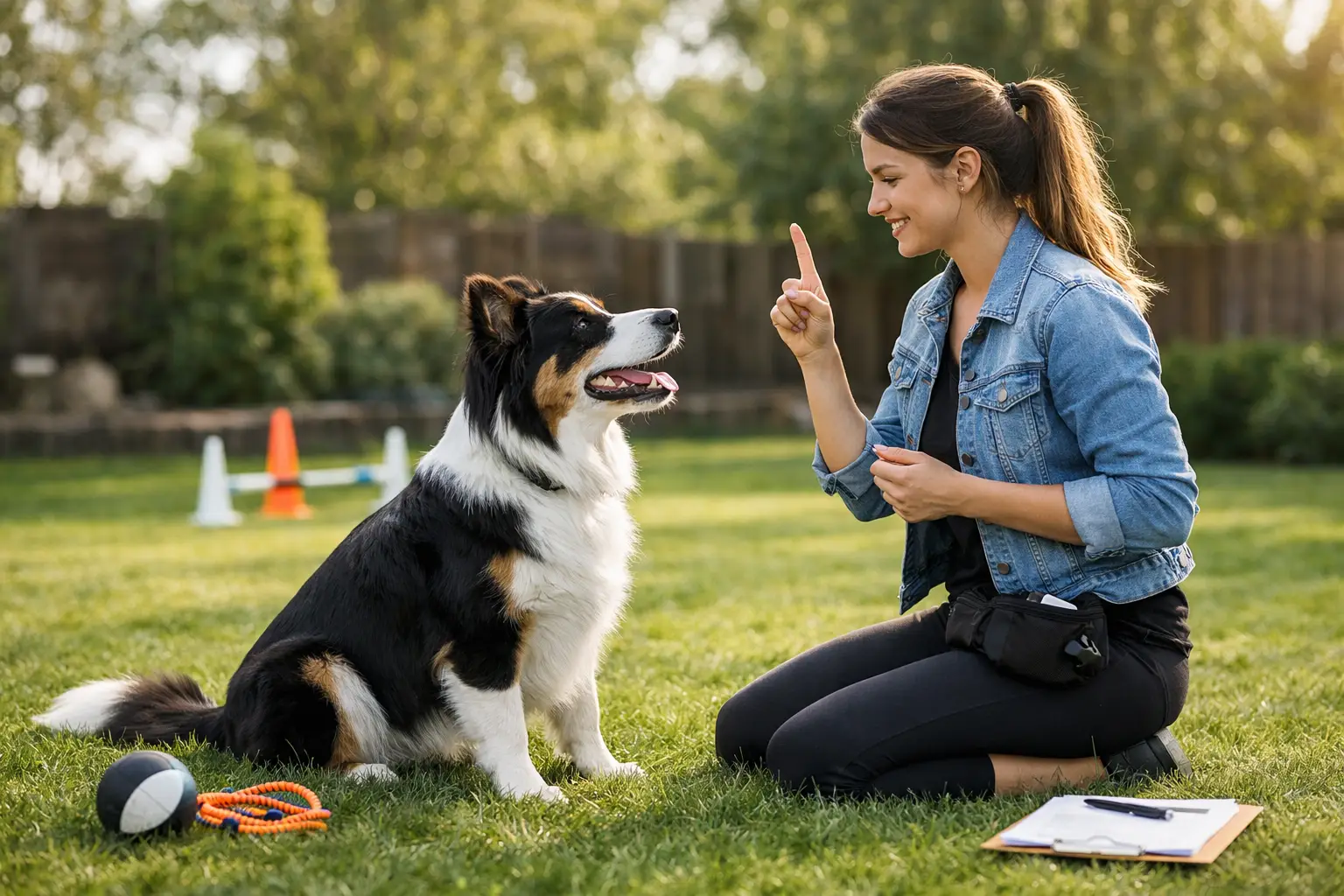
If your dog is calm at 2 PM and losing their mind at 6:17 when the leash comes out, you probably do not need another random training tip. You need a daily dog training plan that fits the way behavior actually shows up in your house.
Most owners are not struggling because they are lazy. They are struggling because the training pieces are disconnected. Barking at the window, jumping on guests, spinning before walks, and wild evening energy can look like separate problems, but they often share the same root: the dog has not practiced how to notice pressure, reset, and recover.
What a daily dog training plan should actually do
A good plan should lower chaos, not add homework. If the routine takes 45 minutes, depends on a perfectly quiet house, or needs professional timing every single rep, it will fall apart by Wednesday. Real owners need a structure they can repeat on normal days, not fantasy days where nobody spills coffee and the dog politely reads the schedule.
The point is not to drill commands all day. The point is to give your dog several short chances to practice the same pattern: notice the trigger, reset before escalation, earn reinforcement for a better choice, and return to life calmly. That is the difference between obedience in the kitchen and regulation when the doorbell rings.
The four-part structure: Notice, Reset, Reward, Release
At Rubyjo K9, the simplest structure is Notice, Reset, Reward, Release. Notice means catching the first shift: staring at the window, pacing when shoes come out, stiffening when guests arrive, or loading up before a walk. If you wait for full barking, lunging, or jumping, you are late. Annoying, yes. Also true.
Reset means interrupting the spiral without turning it into a wrestling match. That might be a pause, a small distance change, a hand target, a scatter, or a familiar cue your dog can still do. Reward means marking the choice you want repeated: softer body, eye contact, moving away from the trigger, four paws on the floor, or walking with a loose leash. Release means the dog goes back to normal life instead of staying trapped in training mode forever.
Build the plan around three pressure points
Do not try to fix the entire dog by breakfast. Pick three pressure points that happen most days: one morning moment, one daytime or environmental trigger, and one evening moment. For many families that means leash excitement in the morning, window barking or visitor noise during the day, and overstimulation after dinner.
Anchor your plan there. Before the walk, practice a calm leash pickup and reward a softer start. At the window, catch the first stare and reset before the bark becomes a hobby. In the evening, use a predictable settle routine before your dog tips into pacing, mouthing, or chaotic play. Small, repeated moments beat heroic once-a-week training sessions.
A simple daily rhythm for busy owners
Morning: regulate before action. If your dog explodes when the leash appears, start before the clip goes on. Pick up the leash, pause, and watch. If your dog jumps, barks, or spins, reset and wait for a softer behavior. Reward that, then continue. The walk starts when the pattern is calmer, not when the dog has successfully trained you to rush.
Daytime: practice one trigger at low intensity. If window barking is the issue, do a short setup when the street is mildly active, not during delivery-driver apocalypse hour. Notice the early lock-on, reset, reward disengagement, then release your dog away from the window. Stop while the dog can still think.
Evening: help the nervous system come down. Many dogs get worse at night because the day stacked too many small triggers. Use a short sniff break, quiet mat time, food puzzle, or calm reward routine before the wildness peaks. You are not trying to exhaust the dog. You are teaching the body how to land.
What to track so you know it is working
You do not need a spreadsheet worthy of NASA. Track two or three useful signals: how long your dog takes to settle after a trigger, how intense the reaction was, and what helped recovery. A dog who still barks but recovers in 20 seconds instead of two minutes is improving.
This is where a simple behavior tracker helps. Record the trigger, distance, intensity, recovery time, and what you did. Patterns show up fast. Maybe walks are worse after a busy window-barking morning. Maybe evening chaos drops when the afternoon trigger load is lighter. That is data you can actually train with.
Common mistakes that make daily plans fail
The first mistake is doing too much when the dog is already over threshold. More reps do not create learning if your dog cannot eat, respond, or disengage. They just rehearse the mess with extra paperwork.
The second mistake is only training after the explosion starts. Your best work happens in the middle zone, when your dog is interested but still reachable. The third mistake is human inconsistency. If jumping sometimes earns attention, leash chaos sometimes opens the door, and barking sometimes gets a dramatic family meeting, the dog is not confused. The system is.
When to make the plan easier
Make the plan easier when your dog cannot respond, cannot take food normally, gets more frantic with each repetition, or needs a long time to recover. Increase distance from the trigger, shorten the session, lower the expectation, or practice at an easier time of day. There is no trophy for making training harder than your dog can handle.
If your dog has a long history of reactivity, panic around visitors, redirected biting, or intense frustration before walks, expect slower progress and get support. Daily structure still helps, but the plan has to match the dog in front of you, not the imaginary golden retriever in a stock photo.
FAQ
How long should I train my dog each day?
For most household behavior goals, three to five short sessions are more useful than one long session. Think two to five minutes around real-life moments: before a walk, near a mild trigger, or during the evening settle routine.
Can a daily dog training plan stop barking and jumping?
It can reduce barking and jumping when the plan targets the moments before those behaviors take off. The goal is not to suppress noise or excitement by force. The goal is to teach an alternative pattern your dog can repeat when pressure rises.
What if my dog gets worse during the routine?
That usually means the setup is too hard, too long, or too close to the trigger. Lower the difficulty and end earlier. If the reaction includes aggression, bite risk, intense fear, pain, sudden behavior change, or redirected biting, work with a veterinarian or certified force-free trainer instead of pushing through.
Safety note
This article is educational and is not a substitute for individualized behavior or veterinary care. If your dog shows aggression, intense fear, bite risk, pain, sudden behavior change, or medical concerns, contact a qualified professional or veterinarian before increasing training difficulty.